
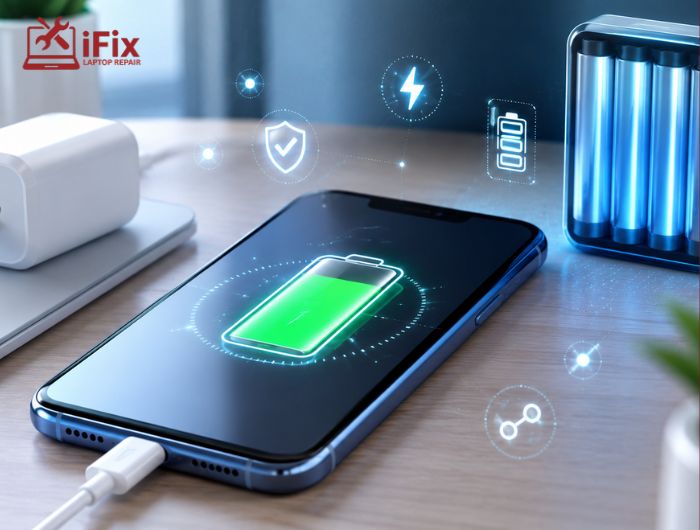
Smartphone users often worry that leaving a device plugged in for too long will permanently damage the battery. Many of these concerns stem from outdated advice that no longer applies to modern devices.
Understanding the truth behind battery overcharging myths can help you make better charging decisions and improve long-term battery performance.
Today’s smartphones use advanced charging technology designed to protect batteries from damage. However, that doesn’t mean every charging habit is harmless. Some practices can still contribute to battery degradation over time.
What is Battery Overcharging?
True overcharging occurs when a battery continues receiving power after reaching its maximum safe capacity. In older battery technologies, this could lead to phone overheating, swelling, and reduced lifespan.
Modern devices powered by lithium-ion batteries operate differently. Once the battery reaches full charge, a built-in Battery Management System (BMS) automatically limits or stops charging. This protection mechanism prevents the kind of overcharging that many people fear.
This is why most battery-overcharging myths are based on older technologies rather than on today’s smartphones and laptops.
Does Overcharging Damage a Battery?
The short answer is usually no.
Most modern phones cannot be truly overcharged because their charging systems are designed to regulate incoming power. When your battery reaches 100%, charging either slows dramatically or stops altogether.
However, constantly keeping a battery at maximum charge for extended periods may still contribute to gradual wear. The issue is not overcharging itself, but the stress caused by maintaining a full charge for long periods.
This distinction is important when evaluating common battery overcharging myths that continue to circulate online.
Is It Safe to Leave Your Phone Charging Overnight?
For most modern devices, overnight charging is generally safe.
Manufacturers such as Apple and Samsung have introduced optimized charging features that learn user habits and delay full charging until closer to wake-up time. This helps reduce unnecessary battery stress.
That said, overnight charging can occasionally expose devices to higher temperatures, especially if they are placed under blankets or pillows. Heat remains one of the biggest threats to battery health.
The real concern is temperature, not the act of charging overnight itself.
What Actually Reduces Battery Lifespan?
Many users focus on battery overcharging myths while overlooking the factors that truly impact battery longevity.
1. Excessive Heat
Heat accelerates chemical aging inside batteries. According to research from the University of Michigan’s Battery Lab and industry studies, elevated temperatures can significantly reduce battery capacity over time.
2. Frequent Full Charge Cycles
A charge cycle refers to using and recharging the equivalent of 100% battery capacity. Batteries naturally lose capacity after hundreds of cycles.
3. Constantly Charging to 100%
While reaching 100% occasionally is not harmful, keeping the battery at maximum charge for extended periods may contribute to faster aging.
4. Deep Discharges
Allowing a battery to regularly drop to 0% places additional strain on its chemistry.
5. Aging
Even with perfect charging habits, batteries naturally degrade over time due to chemical changes inside the cells.
These factors have a much greater impact than most battery overcharging myths suggest.
→ Need a professional laptop battery replacement?
Our technicians can diagnose battery health and replace worn-out batteries with high-quality replacements designed for long-lasting performance.
Do Lithium-Ion Batteries Stop Charging at 100%?
Yes.
Modern devices are equipped with intelligent charging systems that stop charging once the battery reaches full capacity. Some devices may briefly resume charging when battery levels drop slightly below 100%, a process sometimes associated with trickle charging.
This does not mean the battery is being overcharged. Instead, the system is maintaining the desired charge level while protecting battery components.
Understanding this process helps explain why many battery overcharging myths are inaccurate.
What Are The Common Battery Charging Myths
Myth 1: Charging Overnight Ruins Your Battery
Reality: Modern devices are designed to manage overnight charging safely. Excessive heat is the larger concern.
Myth 2: You Must Drain the Battery to 0%
Reality: Lithium-ion batteries perform best when maintained between moderate charge levels.
Myth 3: Charging to 100% Is Always Harmful
Reality: Occasional full charges are perfectly normal. Problems arise when batteries remain at full charge continuously.
Myth 4: Fast Charging Destroys Battery Health
Reality: Most modern fast-charging systems include safeguards to manage temperature and power delivery.
Myth 5: Leaving a Device Plugged In Causes Overcharging
Reality: Advanced charging controls prevent true overcharging in modern electronics.
Myth 6: Using Your Phone While Charging Damages the Battery
Reality: Using a device while charging does not directly harm the battery. The real issue is heat buildup, which can slightly increase wear if the device is under heavy load for long periods.
Myth 7: Cheap Chargers Don’t Affect Battery Health
Reality: Low-quality or uncertified chargers can deliver unstable current and generate excess heat, which may negatively impact battery health over time.
Myth 8: Battery Calibration Fixes All Charging Problems
Reality: Calibration only helps with inaccurate percentage readings. It does not repair physical battery degradation or improve actual battery capacity.
Is It Safe to Leave Your Phone Charging Overnight?
In most cases, yes.
Many modern devices now include optimized charging features that learn your daily routine and delay charging beyond certain thresholds until closer to the time you typically unplug your device.
The bigger concern is where the device is charging.
To reduce battery stress:
- Avoid charging under pillows or blankets
- Keep devices in ventilated areas
- Remove thick protective cases if excessive heat develops
- Use manufacturer-approved charging accessories
Best Charging Practices for Better Battery Health
To maximize smartphone battery lifespan, consider the following habits:
- Keep battery levels between 20% and 80% when practical.
- Avoid exposing devices to excessive heat.
- Use manufacturer-approved chargers.
- Enable optimized charging settings.
- Remove thick cases during intensive charging sessions if heat becomes noticeable.
- Avoid leaving devices in direct sunlight while charging.
These simple habits support long-term battery performance optimization and reduce unnecessary wear.
👉Experiencing charging issues?
Our technicians can inspect and repair damaged charging ports to restore reliable power delivery.
What the Latest Research Says
According to the official battery guidance published by Apple Support, lithium-ion batteries age chemically over time, resulting in reduced capacity and performance.
Research published by Battery University also highlights that heat and prolonged high-voltage states contribute more to battery degradation than traditional concerns about overcharging.
These findings reinforce the fact that temperature management and healthy charging habits matter more than common battery overcharging myths.
Have questions about battery health, charging issues, or device repairs? Our team is ready to help with expert diagnostics and practical solutions for laptops, smartphones, and tablets.
Final Thoughts
Most modern smartphones, tablets, and laptops are designed to prevent true overcharging. While batteries naturally degrade over time, the biggest risks come from heat, excessive charging cycles, and poor charging habits rather than leaving a device plugged in overnight.
Understanding the science behind battery overcharging myths allows users to focus on practices that genuinely improve battery longevity and performance.
Frequently Asked Questions
Does charging a phone multiple times a day damage the battery?
No. Multiple shorter charging sessions are generally better than repeatedly draining the battery completely.
Can a battery last more than five years?
Yes. Proper charging habits and moderate usage can help extend battery lifespan beyond five years.
Does airplane mode charge a battery faster?
Yes. Reducing wireless activity lowers power consumption and may slightly improve charging speed.
Are wireless chargers bad for battery health?
Not necessarily. However, some wireless chargers generate more heat, which can affect battery longevity.
Can software updates improve battery performance?
Software updates often include power management improvements that can optimize battery usage.
