
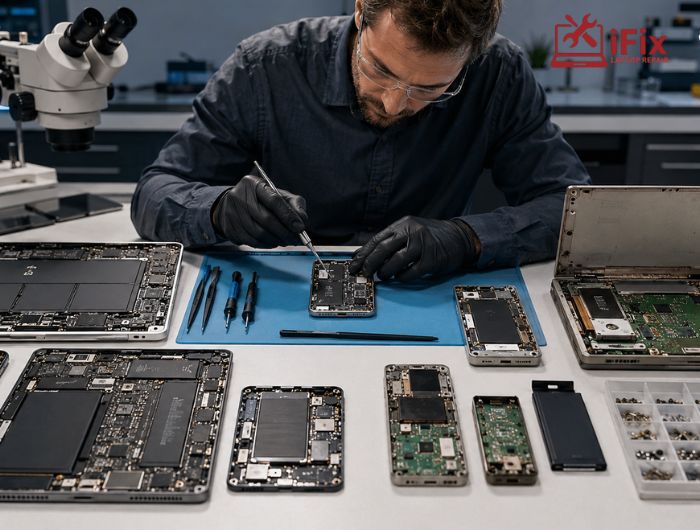
Have you noticed that fixing a phone or laptop today often costs more and takes longer than it did years ago? If you’re wondering why modern devices are harder to repair, you’re not alone. Manufacturers have changed the way electronics are designed, making them slimmer, faster, and more durable, but often less repairable.
Whether it’s a cracked screen, a worn-out battery, or a faulty charging port, many modern devices require specialized tools and expert knowledge to repair. In this guide, we’ll explain why this happens in simple terms and what it means for everyday users.
Quick Answer
Modern devices are harder to repair because they use glued-in parts, tightly integrated components, waterproof seals, and manufacturer-specific software. These design choices improve performance and durability but make repairs more complex and expensive.
Why Are Modern Devices Harder to Repair?
The biggest reason is simple: manufacturers now prioritize design, performance, and durability over easy repairs.
Today’s smartphones, tablets, and laptops are built differently from older models. Instead of making every part removable, many components are permanently attached or packed into extremely small spaces.
Here are the biggest reasons:
- Batteries are glued into the device.
- Chips are soldered directly to the motherboard.
- Devices are made thinner than ever.
- Waterproof seals make opening devices difficult.
- Some replacement parts require software pairing.
- Genuine replacement parts aren’t always easy to obtain.
These changes have significantly reduced device repairability, especially for people who want to fix devices themselves.
Old Devices vs Modern Devices
Feature | Older Devices | Modern Devices |
Battery | Easily removable | Glued inside |
Storage | Usually upgradeable | Often soldered |
RAM | Replaceable | Built into the motherboard |
Screws | Standard screws | Proprietary screws |
Repairs | DIY-friendly | Professional repair recommended |
Waterproofing | Rare | Common |
Internal Layout | Spacious | Extremely compact |
This comparison clearly shows why old electronics were easier to fix than today’s devices.
How Do Sealed Designs Make Repairs More Difficult?
One of the biggest design changes is the move toward sealed electronic components.
Years ago, removing the back cover of a phone only took a few seconds. Today, opening many devices requires:
- Heat tools
- Suction cups
- Precision opening picks
- Adhesive removal tools
Instead of screws, manufacturers often use industrial adhesives to keep devices slim and improve water resistance.
Why do manufacturers prefer sealed designs
They help create devices that are:
- Thinner
- Lighter
- Better protected against dust
- More resistant to water
- Stronger structurally
The trade-off is that even simple repairs become much more complicated.
Did You Know?
According to iFixit, adhesive is now one of the biggest barriers to smartphone repair because it increases repair time and the risk of accidental damage.
Why Are Components Smaller Than Ever?
Modern electronics pack incredible computing power into tiny spaces.
Instead of using separate removable parts, manufacturers now combine several functions onto one circuit board.
For example:
- Memory may be soldered directly onto the motherboard.
- Storage chips are often permanently attached.
- Charging circuits are integrated into larger boards.
- Multiple sensors share the same assembly.
While this improves speed and energy efficiency, it reduces repair-friendly design because replacing a single failed component may require replacing the entire board.
Does Water Resistance Affect Repairs?
Yes, and this is something many people don’t realize.
Most premium smartphones now include water- and dust-resistant seals. These improve durability but also make repairs more challenging.
Every time a device is opened:
- Waterproof adhesive must be removed.
- Old seals need replacing.
- The new waterproof adhesive must be applied correctly.
If repairs aren’t done properly, the original water resistance may no longer be guaranteed.
- According to Consumer Reports, water resistance is a valuable feature for consumers, but maintaining that protection after repairs requires proper replacement seals and careful reassembly.
What About Software Restrictions?
Hardware isn’t the only challenge.
Many manufacturers now use software to verify replacement parts.
For example, after replacing:
- Batteries
- Cameras
- Displays
- Fingerprint sensors
This is another major reason why modern devices are harder to repair, even when genuine replacement components are used.
→ Need Fast and Reliable Device Repairs? Don’t let a minor issue become a major expense.
Can Modern Electronics Still Be Repaired?
The short answer is yes, but the repair process is often more complex than it used to be.
Many people assume a damaged phone or laptop must be replaced, but that’s not always true. Professional technicians can repair many common issues using the right tools, genuine parts, and proper repair procedures.
Common repairs that are still possible
- Screen replacement
- Battery replacement
- Charging port repair
- Camera repair
- Speaker replacement
- Keyboard replacement
- Fan and cooling system repair
- Data recovery in many situations
The key is diagnosing the problem early. Delaying repairs can allow minor issues to develop into more expensive ones.
What Is the Right to Repair Movement?
If you’ve searched for right to repair, you’ve likely seen discussions about giving consumers and independent repair shops better access to replacement parts, repair manuals, and diagnostic tools.
The Right to Repair movement encourages manufacturers to make products easier to maintain instead of requiring complete replacements.
Its main goals include:
- Making genuine spare parts more accessible
- Providing official repair documentation
- Reducing electronic waste
- Giving consumers more repair options
- Extending the lifespan of electronic devices
Recent regulations in several regions, including the European Union, are encouraging manufacturers to improve repairability and product longevity. Similar initiatives are also gaining momentum in other countries.
Industry Insight
The European Commission has introduced new measures aimed at improving product repairability and helping consumers choose repairs over replacements. These efforts are expected to reduce electronic waste while supporting a more sustainable economy.
Quick Comparison: Repair or Replace?
Situation | Repair | Replace |
Cracked screen | ✅ Usually worth repairing | ❌ Not usually necessary |
Weak battery | ✅ Battery replacement is often cost-effective | ❌ Rarely needed |
Charging port failure | ✅ Often repairable | ❌ Usually unnecessary |
Motherboard failure | ⚠ Depends on repair cost | Sometimes more practical |
Outdated performance | Sometimes | ✅ If hardware no longer meets your needs |
How Can You Extend the Life of Your Devices?
Although modern electronics are more complex, proper care can help reduce the need for costly repairs.
Follow these simple tips:
✔ Use a protective case and screen protector.
✔ Avoid exposing devices to excessive heat.
✔ Keep charging ports clean.
✔ Update software regularly.
✔ Replace aging batteries before they begin to swell.
✔ Don’t ignore small issues like loose charging ports or overheating.
✔ Choose qualified repair professionals when repairs are needed.
Taking preventive steps can save both money and downtime over the life of your device.
👉 Have Questions About Your Device?
Our experts are here to help with honest advice and reliable solutions.
Conclusion
Modern electronics deliver better performance, slimmer designs, and advanced features, but these improvements often come at the cost of easier repairs. Understanding why modern devices are harder to repair helps you make informed decisions about maintenance, repairs, and future purchases. With proper care and timely professional repairs, you can extend your device’s lifespan and reduce unnecessary replacement costs.
Frequently Asked Questions
Why are modern phones harder to repair?
Modern phones use compact designs, glued components, waterproof seals, and integrated hardware that require specialized tools and technical expertise to repair safely.
Can modern electronics be repaired?
Yes. Many common issues, such as broken screens, battery failures, charging port problems, and faulty speakers, can still be repaired by experienced technicians.
Why laptops are difficult to repair?
Many newer laptops have soldered memory, integrated storage, sealed batteries, and compact internal layouts that make replacing individual components much harder than in older models.
Does water resistance make repairs more expensive?
Often, yes. Waterproof adhesives and seals require extra care during disassembly and must usually be replaced to help maintain the device’s original protection.
Is repairing a device better than replacing it?
In many cases, yes. Repairing a device can be more affordable, reduce electronic waste, and extend the product’s usable life, especially when the damage is limited to replaceable components.
